Description:
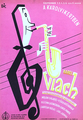
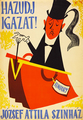
The Life and Adventures of Joaquin Murieta is a 1968 Hungarian vintage pop art theatre poster designed by Gyorgy Kemeny.
Joaquin Murrieta Carrillo (sometimes misspelled Murieta or Murietta) (c. 1829 – July 25, 1853), also called the Robin Hood of the West or the Robin Hood of El Dorado, was a Mexican figure of disputed historicity. The novel The Life and Adventures of Joaquín Murieta: The Celebrated California Bandit (1854) by John Rollin Ridge is ostensibly his story. Legends subsequently arose about a notorious outlaw in California during the California gold rush of the 1850s, but evidence for a historical Murrieta is scarce. Contemporary documents record testimony in 1852 concerning a minor horse thief of that name.
Newspapers reported a bandido named Joaquin, who robbed and killed several people during the same time. A California Ranger named Harry Love was assigned to track down Murrieta and was said to have brought his head in for the bounty. The popular legend of Joaquin Murrieta was that he was a forty-niner, a gold miner and a vaquero (cowboy) from Sonora. His brother was hanged and Murrieta was horse-whipped. His young wife was raped, and in one version, she died in Murrieta's arms. Swearing revenge, he hunted down the men who had violated her. He embarked on a short but violent career to kill his Anglo tormentors. The state of California offered a reward up to $5,000 for Murrieta, "dead or alive."
Pablo Neruda (12 July 1904 – 23 September 1973) was a Chilean poet-diplomat and politician who won the 1971 Nobel Prize in Literature. Neruda became known as a poet when he was 13 years old and wrote in a variety of styles, including surrealist poems, historical epics, political manifestos, a prose autobiography, and passionate love poems such as the ones in his collection Twenty Love Poems and a Song of Despair (1924). Neruda occupied many diplomatic positions in various countries during his lifetime and served a term as a senator for the Chilean Communist Party. When President Gabriel González Videla outlawed communism in Chile in 1948, a warrant was issued for Neruda's arrest. Friends hid him for months, and in 1949 he escaped through a mountain pass near Maihue Lake into Argentina; he would not return to Chile for more than three years. He was a close advisor to Chile's socialist president Salvador Allende; Neruda served as Chile's ambassador to France under his presidency. When he went back to Chile after accepting his Nobel Prize in Stockholm, Allende invited him to read at the Estadio Nacional before 70,000 people. In September 1973, Neruda was diagnosed with prostate cancer. The same month, after the coup d'état led by Augusto Pinochet overthrew Allende's government and resulted in Allende's suicide, Neruda made plans to flee to Mexico in exile. On 23 September, the day before he was to leave the country, Neruda died at the Santa María medical clinic in Santiago, where he had been receiving cancer treatment. While the official cause of death was listed as complications from prostate cancer, the cause and circumstances of his death have been a subject of intense debate, controversy, and investigation ever since.
(source: wikipedia.org)